Ten Days, One Clear Goal
Many women are already managing projects long before anyone gives them the title. They coordinate teams, juggle deadlines, handle budgets, and keep things moving at work, at home, and in their communities.
What is often missing is the structure, the language, and the confidence to say, with certainty: I know how to lead a project from start to finish.
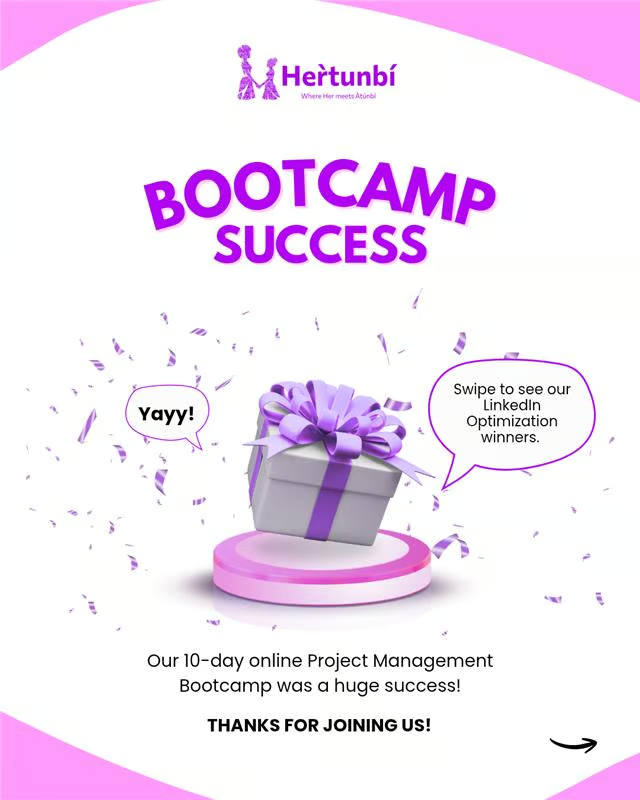
The 10 Days Project Management Bootcamp was created to close that gap. The goal was simple: in ten focused days, help women move from understanding the basics of project management to feeling ready to apply it in real roles.
Why Project Management?
Project management is one of the most transferable skills in any industry. Tech, finance, healthcare, education, non-profits, and creative work all depend on people who can turn ideas into plans and plans into results.
It is also one of the most accessible entry points into tech for women who are changing careers. You do not need to write code to lead a product launch, run a sprint, or keep a delivery team on track. You need clarity, communication, and a reliable way of working.
That is exactly what the bootcamp set out to build.
What the Ten Days Covered
Each day built on the one before it, so participants could see how the pieces of a project fit together rather than learning them as isolated topics.
Days 1–2: Foundations
We started with the fundamentals: what a project is, how it differs from day-to-day operations, and the full project lifecycle from initiation to closure. Participants learned the core vocabulary so they could speak confidently about scope, stakeholders, deliverables, and constraints.
Days 3–4: Planning With Purpose
Next came planning. Participants practised defining scope, breaking work into manageable tasks, estimating timelines, and identifying dependencies. The focus was on building plans that are realistic, not just impressive on paper.
Days 5–6: Agile and Ways of Working
Because so many teams, especially in tech, work in agile environments, we explored Scrum and Kanban, sprint planning, stand-ups, and retrospectives. Participants compared traditional and agile approaches and learned when each one makes sense.
Days 7–8: People, Risk, and Communication
Projects succeed or fail because of people. These sessions covered stakeholder management, managing expectations, running effective meetings, identifying risks early, and communicating progress clearly, including when things are not going to plan.
Days 9–10: Putting It Into Practice
The final days brought everything together. Participants worked through a practical project scenario, produced their own planning documents, and presented their approach. They also spent time on career readiness: how to describe their experience, position their transferable skills, and talk about project work in interviews.
More Than a Training
What made the bootcamp special was not only the content. It was the room.
Women came from different backgrounds and different stages of life. Some were exploring a career switch. Some were already in project-adjacent roles and wanted to formalise what they knew. Some simply wanted to be more organised and intentional in the work they were already doing.
Throughout the ten days, they asked questions, shared their experiences, encouraged each other, and learned from one another’s journeys. That sense of community is at the heart of everything Her̀tunbí does.
What Participants Walked Away With
By the end of the bootcamp, participants had a clear understanding of the project lifecycle, hands-on experience with practical planning tools, working knowledge of agile methods, and a portfolio-ready project they could speak about with confidence.
More importantly, many left with a new way of seeing themselves: not as someone who helps out with projects, but as someone who can lead them.
What Comes Next
The bootcamp is one part of a bigger commitment to helping women build careers with the right skills, support, and community around them.
If you would like to be part of a future cohort, or you know a woman who would benefit from it, stay connected with Her̀tunbí. The next room is waiting to be filled.